Nikki Dobrin, December 18th 2025
Mountains
of waste do not typically capture headlines unless they overflow into streets,
pollute waterways, or burn in noxious clouds. But in the fastest-growing cities
on earth, the same thing is happening – first subtly, then suddenly.
Urban
waste is expected to increase significantly over the next few decades. The
worst-hit will be cities that are least prepared to deal with it. Somewhere
between stretched resources and disorganized governance structures, waste
management appears to be failing – and with it, a vital chance to tackle global
climate change.
It
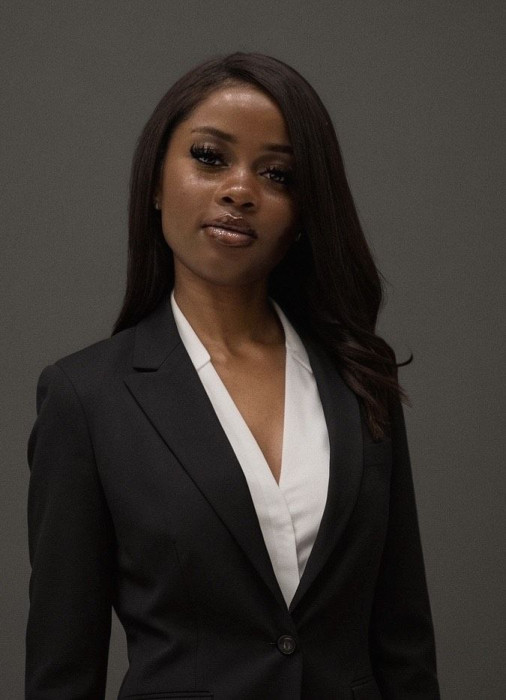
is in this gap between crisis and possibility that environmental scientist
Josephine Boadi-Mensah has built her work: “My work bridges environmental
science and social analysis by drawing on academic research alongside the
perspectives of people in affected communities, all aimed at building
practical, evidence-based sustainability solutions.”
Josephine’s
research dissects how this failure occurs – and, more importantly, how to turn
waste from a problem into a solution to climate change. Her work has earned her
both national and international accolades. She was named the Best Emerging
Environmental Leader in Canada in 2025.
That’s
the perspective – informed by both data and experience – that has made her one
of the most in-demand experts in urban waste systems. Not many people have the
same depth in all these areas – data, experience, and a singular approach that
connects different fields that usually operate in splendid isolation.
A System under Strain
Urban waste infrastructure is
breaking down under the strain it was not designed to withstand.
In many emerging economies,
collection rates still fall short of half of the total waste generated. What is
not collected is burned, dumped, or left to rot, producing methane, a
greenhouse gas with a global warming impact several times greater than carbon
dioxide in the short term.
Josephine’s research points to a
deeper issue: systemic policy failure.
According to Josephine: “Policy
enforcement together with public engagement is essential—my research models how
these factors influence segregation and recycling, providing the evidence base
for more effective frameworks.”
Weak enforcement allows even
well-designed systems to falter, while low public engagement undermines basic
practices like sorting waste at the source. She has conducted comparative
studies across different cities, revealing striking contrasts.
She conducted a comparative study in
2025 on emerging economies, concluding that institutional capacity is one of
the strongest predictors of waste management outcomes.
Some urban centers achieve efficient
waste management, while in others, despite similar economic conditions, it is
poor due to a lack of accountability.
Thus, in this context, the
importance of her contributions lies.
An example of how generally some
aspect of the work is already of major significance in the field is reflected
in her own words: “My focus is on how climate issues impact vulnerable people
and communities, and in doing so, I help lawmakers and researchers gain a
clearer understanding of those challenges.”
That insight has shifted attention
toward the human consequences of waste system failures, not just their
environmental metrics.
Measuring What Matters: The SWMI
To make sense of these
disparities, Josephine developed the Sustainable Waste Management Index
(SWMI)—a tool that has quickly become central to understanding urban waste
performance.
First introduced in her
2025 research on comparative waste systems, the index was designed to move
beyond narrow metrics and capture the full complexity of waste governance.
She has pointed out: “The
Sustainable Waste Management Index I created offers a comprehensive,
multidimensional approach to measuring environmental, socio-economic, and
technological performance, making it possible to equitably compare diverse
contexts.”
The power of the SWMI lies
in its scope. It covers all aspects of governance, community, technology, and
environment. For example, it shows how urban cores outperform peripheral or
semi-rural areas not because of lower waste, but because of more effective
implementation. This helps highlight inequalities that may have gone unnoticed,
especially in less fortunate communities that need such services.
Few tools in the field
offer this level of clarity; her index has become a benchmark for evaluating
waste systems.
Beyond Data: A Mixed Methods
Advantage
What sets Josephine
apart from other researchers is not only the subject of her research but also
the method she uses to analyze it.
Josephine’s method
combines quantitative modeling with qualitative analysis, an unusual
combination of methods that has helped her stand out from other researchers in
the field of environmental studies.
Josephine says: “By
merging quantitative modeling with the qualitative experiences of communities,
I develop comprehensive sustainability metrics that uncover previously hidden
gaps in waste systems, whether urban or rural.”
Statistical models
are based on real-world experiences. These are gathered through talking to
people, conducting surveys of waste workers, and visiting communities at the
epicenter of waste mismanagement.
She helps point out
gaps that may have gone unnoticed by people less aware of the subject. This
method of analysis is not limited to academic circles.
An example of how
the person being discussed has had a wider impact and influence through his
work in his field/industry emerges from his own reflection: “My research pushes
for an integrated view—one that weighs environmental alongside social
factors—when approaching environmental challenges.”
That shift toward
integrated thinking is influencing how sustainability challenges are approached
across disciplines.
Policy as the Missing Link
If data reveals the problem,
policy determines whether it is solved. Josephine’s work always points to one
conclusion: that the government plays a crucial role in the functioning of
waste systems.
Josephine says: “A central
element of my work is developing policy recommendations and sustainability
frameworks that assist policymakers and communities in understanding and
addressing environmental challenges, including the connections between climate change,
migration, and inequality.”
Her recommendations are
practical, data-backed, and proven to work.
In her famous research paper,
The Role of Government Policies in Strengthening Urban Waste Management
Systems, she shows how government regulations, implementation, and public
participation can directly influence the effectiveness of waste systems.
Josephine’s policy priorities
are clear:
- Decentralized
systems that suit local conditions, ranging from advanced technologies in
urban environments to composting and bioenergy in less dense regions.
- Extended
Producer Responsibility to shift end-of-life costs to manufacturers, which
in turn encourages recycling.
- Providing
incentives and enforcing penalties.
- Ensuring
public involvement and education to promote source separation.
It is unusual to find a
researcher who can move so fluidly between theory and practice.
Her research seeks to bring
together academic expertise and policy instruments in a way unprecedented:
strategies that are both informed by research and applicable in practice.
Rethinking Waste as a Resource
Waste, in Josephine’s
framework, is not simply a byproduct to be managed but a resource waiting to be
recovered.
She shares: “The
traditional linear waste model is not sustainable—my circular economy oriented
frameworks measure the transition toward composting, bioenergy, and resource
recovery, supporting long term resilience.”
Another aspect that her
approach contributes to the discussion is the dimension of fairness.
An example of how her style
or approach has changed certain practices can be seen in her own statement:
“When I analyze environmental issues, I also consider social dimensions such as
migration and inequity—that perspective helps produce fairer, more balanced
solutions.”
By injecting equity into
environmental analysis, she has helped shape solutions that are more inclusive
and equitable.
Roots in Ghana, Global in Reach
Her worldview is deeply
informed by her Ghanaian upbringing, where environmental challenges are not
abstract concepts but part of her lived reality.
She says: “I grew up in
Ghana, where environmental changes such as floods and waste management affected
people. This sparked my interest to know how environmental risk affects
people’s lives.”
Her upbringing has been the
foundation for a life’s work that is at once scientifically informed and
empathetically aware. Her work has been dedicated to those most affected by
environmental risk.
As she puts it:
“Disadvantaged communities experience risks that are disproportionate—my
interdisciplinary approaches embed equity considerations to generate
environmental assessments that are both fairer and more complete.”
Lessons for the United States
Although most of Josephine’s
work has focused on emerging economies, it has wider implications beyond these
countries. The US faces similar waste management issues, including stagnant
recycling rates, rising greenhouse gas emissions from landfills, and pressure
to meet climate change targets.
According to Josephine:
“From the environmental challenges in Ghana to settings around the world, my
frameworks are designed to adapt to cultural and economic differences, ensuring
that assessments are genuinely inclusive.”
The SWMI approach could be
valuable to US cities seeking to understand differences between affluent
neighborhoods and underserved communities.
Her focus on decentralized
systems aligns with a growing interest in localized composting and
waste-to-energy solutions. EPR policies—already gaining traction in some
states—could be expanded using her evidence-based models.
At its core, her work
demonstrates that technical solutions alone are not enough; governance, equity,
and public engagement are equally critical.
What Mentors and Colleagues Say
Josephine’s legacy is also
supported by senior academics with whom she has worked closely over the
years.
Professor Alexander
Kwarteng, a Professor of Microbiology and Immunology at the Kwame Nkrumah
University of Science and Technology, says: “She showed a level of intellectual
maturity and initiative that clearly set her apart from her peers, with a rare
ability to understand complex ideas and translate them into practice.”
Professor Arthur Dissou
Yarhands, Dean of the Faculty of Applied Science and Mathematics Education at
AAMUSTED, adds: “Her work goes beyond routine academic contribution,
demonstrating independent, solution-oriented thinking and a level of technical
competence that consistently exceeds expectations. What makes her work
important is its direct, measurable impact on environmental education and
community engagement practices.”
While not a direct mentor,
a faculty member at the University of Manitoba observes: “Josephine was always
looking for ways that small environmental actions could add up to have a
broader impact, and her ability to translate that understanding into practice
was what made her stand out.”
And a community volunteer
from Ghana shares: “Her ability to bring people together behind an
environmental movement was impressive, as she brings a real passion to the
work, which translates into getting people involved in positive change.”
A Record of Scholarly Excellence
Between 2021 and 2025,
Josephine published numerous peer-reviewed articles that are at the center of
the discourse on sustainable waste systems, policy, and climate
mitigation.
The outstanding research
article, "Waste Management in the 21st Century," won the Best
Research Article Award.
The published articles
cover various themes such as policy, comparative waste systems, climate
mitigation, smart cities, and the circular economy. Josephine’s scholarly
contributions have gone global after being selected as an oral presenter at the
International Conference on Desalination and Renewable Energy, held in Bangkok,
Thailand, in November 2025.
Her academic reputation
is evidenced by her having been entrusted by the academic community to review
10 scholarly manuscripts. Josephine is an associate editor of two international
journals, the Journal of Sustainable Agriculture and Environmental Innovations,
as well as the Sarcouncil Journal of Public Administration and
Management.
Professional Affiliations
She holds professional
memberships with the International Society for Environmental Professionals
(ISEP) and the Society for Conservation Biology (SCB) in its professional
membership category, and participates in the World Economic Forum’s affiliated
community.
As she puts it: “I am deeply
committed to teamwork and collaboration, which guarantees that the assessment
frameworks I develop are practical, ready for policy use, and rooted in
real-world data.”
A Policy Driven
Path Forward
Urban
waste systems are often framed as an intractable problem. Josephine reframes
them as a space for innovation and transformation.
She
says: “My work connects academic theory with real-world implementation through
the development of indices that policymakers can apply to strengthen urban
waste governance and climate strategies.”
That
connection—between research and implementation—is where meaningful progress
takes shape. Her motivation remains rooted in impact: “My goal is to contribute
to stronger environmental policies and more resilient communities.”
Fixing
urban waste systems does not require guesswork.
The
tools, data, and strategies are already available, many of which have been
perfected in Josephine’s research. Decentralized systems, Extended Producer
Responsibility, incentives and enforcement, and education can all help turn
waste from a liability into an asset.
The
missing piece is a willingness to take meaningful action.
Josephine’s
own words speak to her motivation: “I hope to be remembered as someone who
enabled communities to understand environmental challenges and respond to them
effectively.”
Josephine’s
work is not merely informative; it is prescriptive, grounded not only in data
but also in her experience of the world.
Cities
that are willing to take action with these strategies can not only manage waste
but also solve problems like climate change, create new resources, and build
systems that can better serve both people and the planet.