In recent years, education technology has expanded rapidly. Schools, teachers, and institutions now have access to a wide range of digital platforms designed to improve learning, engagement, and classroom management. Many of these tools are powerful and feature rich, offering dashboards, analytics, AI driven recommendations, and integrated learning systems.
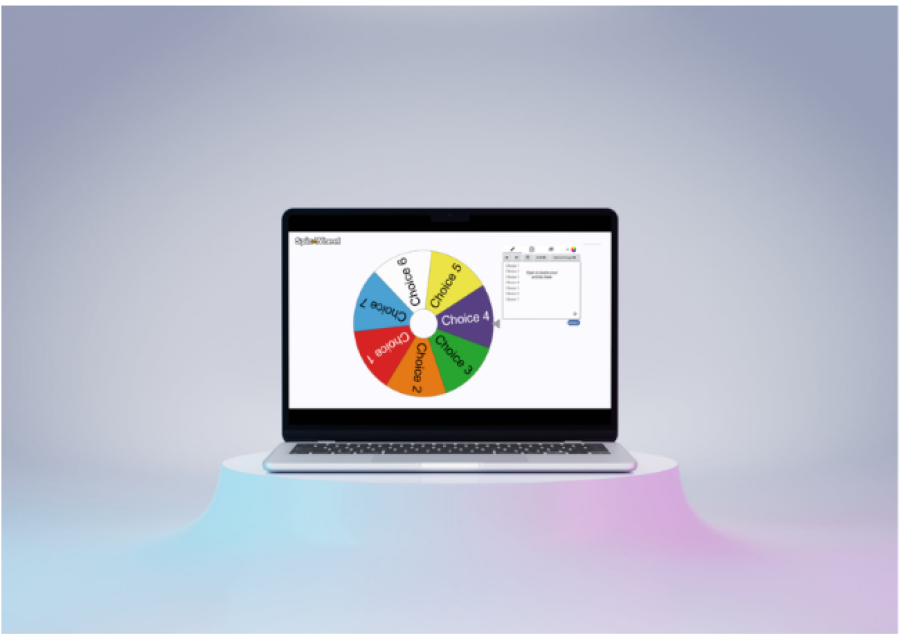
However, despite this growth in capability, a different trend is becoming increasingly visible in real classrooms. The tools that teachers consistently use and keep coming back to are not always the most advanced ones. Instead, they are often the simplest, such as using a yes or no wheel to make quick decisions about whether to do something in the classroom or not.
Lightweight EdTech tools are quietly outperforming complex education platforms in day-to-day classroom use. This shift is not driven by marketing or hype, but by practical classroom realities.
The growing gap between product design and classroom reality
Many EdTech platforms are designed with scale in mind. They aim to serve entire schools, districts, or global audiences. As a result, they often include:
Multi-layer dashboards
Student tracking systems
Assessment analytics
Integration with learning management systems
AI assisted recommendations
While these features can be valuable, they also introduce friction. Teachers often face limited time, large class sizes, and constant interruptions. In that environment, tools need to be immediate and intuitive.
A platform that requires training or setup time is less likely to be used consistently, even if it is more powerful on paper.
Why feature-heavy tools often fail to achieve daily adoption
In theory, more features should create more value. In practice, adoption depends on something different: effort versus reward.
When a tool requires too much effort to learn or operate, it becomes harder to integrate into daily teaching. This leads to a predictable pattern:
Teachers try the platform initially
Usage drops after early sessions
The tool becomes secondary rather than essential
Simpler alternatives take its place
This does not reflect resistance to technology. It reflects the realities of classroom time pressure and attention management.
The rise of single-purpose micro-tools in education
A noticeable shift in EdTech is the growing success of tools that focus on doing one thing extremely well. These lightweight tools avoid unnecessary complexity and instead prioritize speed and usability.
They typically:
Require no training
Work instantly in a browser or mobile device
Solve one clear classroom problem
Deliver immediate value within seconds
One example of this category is random selection tools used for classroom participation. These tools introduce fairness, unpredictability, and structure into student engagement without requiring complex setup or configuration.
A widely used example is Spin the Wheel, a multi-purpose tool that allows teachers to randomly select students, questions or activities in a visual and interactive way using single or multiple wheels.
Why teachers consistently choose simplicity in real classrooms
The preference for lightweight tools is not about rejecting innovation. It is about optimizing for classroom conditions.
Teachers tend to prioritize:
Speed during live lessons
Minimal preparation time
Smooth lesson flow without interruptions
Clear and immediate outcomes
In practice, a tool that works instantly is more valuable than a tool that is powerful but slow to integrate into teaching routines.
This is why micro-tools often spread organically among educators, even without formal adoption processes.
How mobile access is accelerating classroom tool adoption
Mobility has also played a key role in this shift. Classroom decisions are often made in real time, and teachers increasingly rely on mobile devices during lessons.
Tools that are accessible on phones or tablets reduce friction even further by eliminating the need to switch devices or interrupt teaching flow.
This portability makes spontaneous classroom engagement easier and more natural, which directly supports higher adoption.
What this shift reveals about the future of EdTech
The increasing success of lightweight tools highlights a key insight for education technology companies.
More features do not automatically create more value in classrooms. In many cases, they create friction instead.
What drives real adoption is:
Immediate usability
Clear purpose
Low cognitive load
Fast integration into teaching routines
This represents a shift from platform thinking to utility thinking in EdTech design.
Simplicity as a strategic advantage in education technology
As the EdTech market becomes more crowded, simplicity is emerging as a competitive advantage rather than a limitation.
Tools that succeed in real classrooms tend to share a common set of traits:
They solve a specific problem well
They require almost no onboarding
They fit naturally into existing teaching methods
They provide value instantly without setup
This explains why lightweight tools continue to gain traction even in environments dominated by larger and more complex platforms.