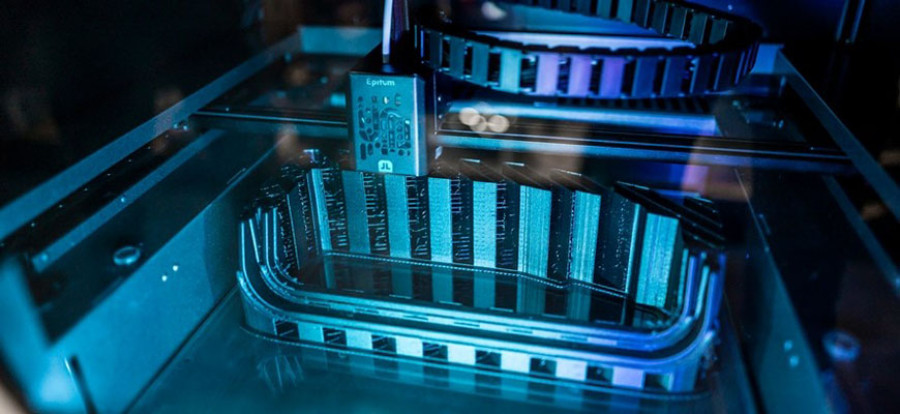
The UAE has quickly become a hub for 3D printing technology, with a growing number of industries adopting it to streamline operations and unlock new possibilities. From architecture to manufacturing, the integration of 3D printing is not only enhancing productivity but also driving innovation across sectors.
Current Market Landscape
The 3D printing market in the UAE is expanding at a rapid pace. The nation has already witnessed the deployment of 3D printing in various sectors such as construction, aerospace, and healthcare, where the technology has demonstrated its ability to improve efficiency, reduce costs, and foster innovation.
Notable players in 3D printing industry include local firms, which are now at the forefront of manufacturing professional 3d printers in UAE. The domestic production of these printers highlights the country’s commitment to developing local capabilities and reducing reliance on imported technologies.
Government Initiatives and Support
The UAE government has long recognized the importance of 3D printing and has rolled out numerous initiatives to foster its development. Key policies include the "Dubai 3D Printing Strategy," which aims to make Dubai a global leader in 3D printing by 2030. This strategy includes investments in infrastructure, funding for research, and the establishment of 3D printing hubs.
Additionally, the government has been working to implement regulations that promote innovation while ensuring safety and sustainability.
Emerging Technologies in 3D Printing
The next wave of 3D printing technologies promises to bring even greater advancements that will shape the future of the UAE’s industries. These technologies are poised to revolutionize production methods and offer solutions to current limitations.
Advancements in Materials
One of the most significant advancements in 3D printing is the development of new materials that expand the range of applications. In the UAE, materials such as bio-materials, composites, and advanced polymers are gaining traction. Bio-materials, in particular, are expected to play a pivotal role in healthcare, where they could be used to create custom prosthetics, implants, and even tissue for regenerative medicine.
Additionally, the development of high-performance composites for aerospace and construction industries is set to enhance the strength and durability of 3D printed parts.
Digital Manufacturing and Automation
Digital manufacturing and automation are poised to transform how products are designed and produced. Automation enables greater efficiency and scalability, which is particularly important for industries like construction and automotive. However, adopting automated systems presents a challenge for businesses that must adapt their existing processes to integrate these new technologies.
In this transition phase, companies can benefit from partnerships with 3D printer suppliers, who offer integrated solutions and implementation services to ensure smooth adaptation to automated workflows.
By evaluating material usage, production times, and associated costs, the Business Calculator empowers companies to make data-driven decisions, ultimately optimizing their production strategies and securing a strong return on investment in additive manufacturing technologies.
Integration of AI and Machine Learning
Artificial intelligence (AI) and machine learning are beginning to play a crucial role in 3D printing. AI algorithms can enhance design processes by analyzing data to optimize designs for performance and manufacturability. Machine learning can improve the production process by predicting and correcting issues in real- time, leading to fewer errors and faster turnaround times. In the UAE, industries like aerospace, where precision is paramount, stand to benefit significantly from these innovations.
Development Prospects and Future Applications
Looking ahead, the future of 3D printing in the UAE is bright, with numerous sectors poised to leverage the technology for transformative advancements.
Urban Development and Construction
In the realm of urban development and construction, 3D printing holds the potential to revolutionize traditional building methods. The UAE is already a pioneer in 3D-printed buildings, with Dubai’s "Office of the Future" being one of the first fully 3D-printed structures. Future developments could see entire neighborhoods constructed using 3D printing, reducing material waste, labor costs, and construction time. This shift could also pave the way for more sustainable and affordable housing options in the region.
Healthcare Innovations
Healthcare is another sector set to benefit from 3D printing’s growing capabilities. Custom implants, prosthetics, and surgical tools can be produced with higher precision, reducing the risk of complications and improving patient outcomes. Furthermore, the emergence of bioprinting—printing with living cells—offers the potential to revolutionize regenerative medicine and tissue engineering. As the UAE continues to invest in its healthcare infrastructure, 3D printing is likely to play an increasingly vital role in enhancing patient care.
Aerospace and Defense Advancements
In aerospace and defense, 3D printing is expected to become integral to the production of lightweight, high-performance parts. The ability to print complex geometries with specialized materials allows for the creation of components that are both strong and lightweight—ideal for the demanding requirements of aerospace applications.
The UAE’s aerospace sector, supported by the government's strategic investments in this field, is expected to benefit greatly from these advancements.
Education and Training
Finally, the potential applications of 3D printing in education cannot be overlooked. 3D printers can be used to create visual aids, prototypes, and models that enhance learning experiences, particularly in fields like engineering and design. Furthermore, 3D printing can provide students with hands-on experience, fostering creativity and problem-solving skills. By incorporating 3D printing into the curriculum, educational institutions in the UAE can better prepare the next generation of innovators for careers in cutting-edge industries.
Conclusion
The UAE’s commitment to embracing 3D printing technology is setting the stage for exciting developments across multiple sectors. From advancements in materials and automation to transformative applications in construction, healthcare, aerospace, and education, 3D printing is positioned to be a key driver of the nation’s economic growth.
With continued government support, innovation, and investment from both local and international players, the UAE is on track to become a global leader in 3D printing technology. Stakeholders across industries should seize the opportunities presented by this revolutionary technology to stay ahead of the curve and contribute to the UAE’s vision for the future.