As digital content creation accelerates, businesses and creators constantly seek innovative ways to streamline video production without sacrificing quality. Voiceovers are a vital component of engaging content, yet traditional narration comes with challenges—costly talent, lengthy recording sessions, and tedious editing. This is where AI-powered text-to-speech technology steps in, reshaping how voiceovers are produced. With AI-generated voices becoming increasingly lifelike, a critical question emerges: Can AI voiceovers match the authenticity and emotional depth of human narration? Let's explore the growing capabilities of AI in the voiceover industry and how it stacks up against traditional human narration.
The evolution of voiceovers in video marketing
Voiceovers have always played a crucial role in video marketing, helping brands create engaging, professional, and persuasive content. Whether for explainer videos, advertisements, or e-learning modules, narration enhances storytelling and keeps viewers hooked. Traditionally, human voiceover artists were the go-to choice, but with the rise of AI-driven solutions, businesses now have an alternative.
The question is: Can AI-generated voiceovers truly compete with human narration? With advancements in artificial intelligence, tools like the best AI video generator are making it easier than ever to create high-quality videos, including voiceovers that sound more human than robotic. But does AI have what it takes to replace human voice artists? Let’s explore.
Why are businesses embracing AI voiceovers?
Brands are constantly looking for cost-effective and efficient ways to create high-quality content. Hiring a professional voice artist can be expensive, and the process of recording, editing, and making revisions can be time-consuming. AI-generated voiceovers, on the other hand, provide a faster and more budget-friendly solution.
Here are some of the biggest reasons businesses are shifting toward AI-generated narration:
- Cost savings – AI eliminates the need for hiring voiceover artists and renting expensive studio equipment.
- Speed and efficiency – AI voice generators can instantly convert text to speech, reducing production time.
- Versatility – Businesses can choose from a wide range of voices, accents, and languages, allowing them to target a global audience.
- Consistency – AI-generated voices maintain a uniform tone and style across multiple videos, ensuring brand consistency.

With AI-powered tools like the best text to speech AI video generator, marketers can create voiceovers that are nearly indistinguishable from human narration, making it an attractive
alternative for businesses of all sizes.
Where human voiceovers still have an edge?
Despite AI’s rapid progress, human narration continues to hold certain advantages. The biggest challenge for AI-generated voices is the ability to capture deep emotion and nuanced expression. Human voice actors can inject personality, warmth, and authenticity into their delivery, which is crucial for emotional storytelling.
Some scenarios where human narration still shines include:
- Emotional storytelling – AI voices struggle with conveying deep emotions such as excitement, sadness, or empathy, which are crucial for impactful storytelling. Human-voice actors can naturally express these emotions, making narratives more compelling and relatable. This is especially important for documentaries, audiobooks, and heartfelt advertisements.
- High-end branding videos – Luxury brands and premium services often require a refined and sophisticated touch in their marketing materials. Human voiceovers add a sense of exclusivity and authenticity that AI-generated voices may lack. This enhances brand perception and maintains a strong emotional connection with high-value customers.
- Improvised speech – AI voice generators strictly follow pre-written scripts, while human narrators can adapt, improvise, and bring spontaneous creativity to their delivery. This is essential for live events, interviews, and unscripted content, where flexibility and natural flow play a key role in audience engagement.

How is AI closing the gap?
While AI may not fully replace human voiceovers, the technology is rapidly improving. AI voice generators are becoming more sophisticated, incorporating elements such as:- Realistic intonations and pauses – Advanced AI models now mimic natural speech patterns, incorporating subtle variations in pitch, rhythm, and pauses. This makes AI-generated voiceovers sound more human-like and reduces the robotic tone often associated with early versions.
- Customizable tone and emotion – Some AI tools allow users to adjust the voice’s tone, speed, and emotional intensity to better fit different contexts. This enables businesses to create voiceovers with a range of emotions, from excitement for product launches to calm and authoritative tones for educational content.
- Multi-language capabilities – AI voice generators can seamlessly produce voiceovers in multiple languages and accents, making them ideal for global campaigns. This eliminates the need for multiple voice actors and ensures consistent branding across different markets.
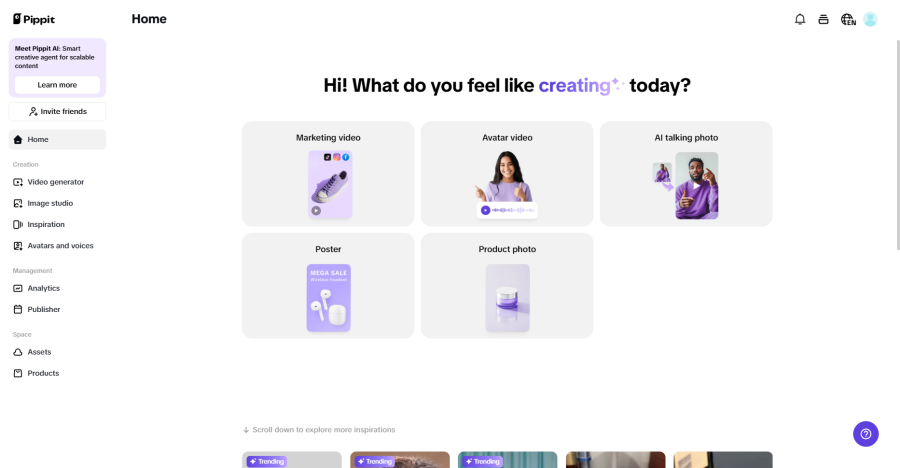
Tools like Pippit AI and other AI-powered platforms are at the forefront of this innovation, providing businesses with high-quality voiceover solutions that continue to get better over time.Choosing between AI and human voiceovers for your marketing strategy
The decision to use AI-generated voiceovers or human narration ultimately depends on the type of content you’re creating and your brand’s specific needs. Here’s a simple breakdown:AI voiceovers offer a more affordable option compared to human narration. They can generate voices instantly, saving time and reducing costs. However, while AI-generated voices are continuously improving, they still lack the emotional depth that human narrators bring, which is often highly expressive and nuanced.When it comes to language options, AI voiceovers can easily support multiple languages, making them ideal for global reach. In contrast, human narration requires hiring multiple voice actors for different languages, which can increase costs and complexity.AI voiceovers are great for maintaining consistent branding, as they can replicate the same tone and style across various content. On the other hand, human narration is better suited for emotional and personalized content, as it brings a level of authenticity and warmth that AI currently cannot match.For businesses that prioritize speed, efficiency, and scalability, AI-powered voiceovers are an excellent solution. However, if your brand relies on deep storytelling and emotional appeal, a human voiceover might still be the best choice.
Final thoughts: the future of voiceovers in video marketing
AI voice generators have come a long way and are becoming a staple in the content marketing world. While human narration continues to offer unique advantages, AI-driven voiceovers are proving to be a game-changer for brands looking for cost-effective, high-quality solutions.As AI technology advances, we can expect even more realistic, emotive, and customizable voiceovers. The key for businesses is to find the right balance—leveraging AI for efficiency while incorporating human narration where authenticity is needed.So, can AI text-to-speech video generators compete with human voiceovers? The answer is yes—at least in many scenarios. And with the right tools, marketers can unlock new levels of creativity and productivity in their video content strategy.